

ALCON ARGOS Biometer
At California Center for Refractive Surgery, our commitment is simple: the best vision your eyes are capable of. The ALCON ARGOS biometer is one of the most advanced eye-measurement instruments in the world — but a great instrument only becomes a great result in experienced hands.
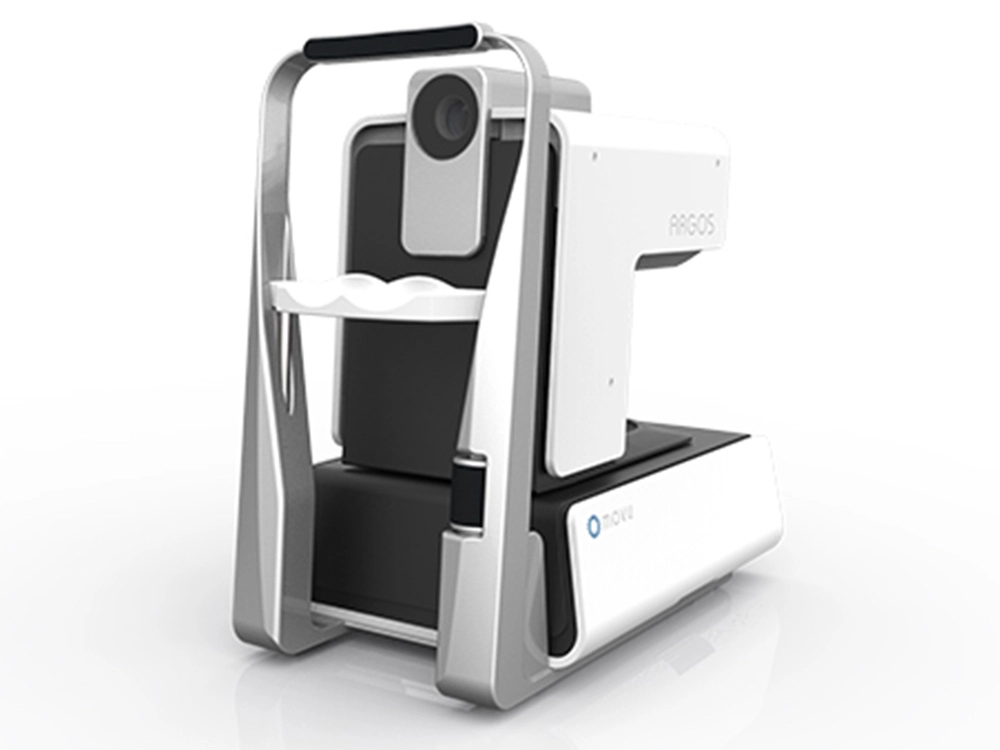
At California Center for Refractive Surgery, our commitment is simple: the best vision your eyes are capable of. The ALCON ARGOS biometer is one of the most advanced eye-measurement instruments in the world — but a great instrument only becomes a great result in experienced hands.
That is the difference at CCRS. We don't just invest in the finest technology for cataract surgery and refractive lens exchange — we've mastered it, so every measurement is turned into the right lens choice for your eyes and your life.
The best vision your eyes are capable of. That is the only standard we measure ourselves against.
Not the fastest appointment. Not the cheapest lens. The sharpest, most dependable result your eyes can achieve. Every instrument we invest in and every clinical decision we make is judged against a single question: does this give you a better outcome? If it doesn't, it doesn't belong in your care.
Anyone can buy the technology. Mastering it is rare.
Advanced instruments have become widely available — and that's a good thing. But a device doesn't deliver an outcome; it delivers data. The ARGOS produces some of the most precise measurements in ophthalmology, yet those numbers still have to be read correctly: which lens formula fits this eye, which implant suits this person's life, where to trust the reading and where to verify it. That interpretation is the work of experience, and it's where results are won or lost. We don't simply own the best technology — we've spent our careers learning to extract every bit of benefit from it.
Measurements are raw material. Results are built on top of them.
A perfect measurement handed to the wrong formula still produces the wrong lens. The value CCRS adds sits in the layers above the data — the clinical decisions that turn a number into the right implant for you.
It's why two practices with the same ARGOS can arrive at different plans for the same eye. The instrument is a commodity. The judgment applied to it is not.
What is the ALCON ARGOS biometer?
The ALCON ARGOS is a swept-source OCT (SS-OCT) optical biometer — among the most advanced eye-measurement instruments available. In under a second it scans the entire eye with a 1060 nm light beam and precisely measures the axial length, corneal power, anterior chamber depth and lens thickness. CCRS surgeons use these measurements to calculate the exact intraocular lens (IOL) power you need — the single most important step toward a sharp, glasses-reducing result after cataract surgery or refractive lens exchange.
It measures each part of your eye on its own terms.
Older biometers apply one average value to the whole eye. The ARGOS uses a sum-of-segments method: it measures the cornea, aqueous, lens and vitreous separately, applies the correct refractive index to each, then adds them together. Because every eye is built a little differently, this yields a more accurate length — and, in expert hands, a more accurate lens power — especially in unusually long or short eyes.
How our surgeons extract more from the same instrument.
"Mastery" isn't a slogan — it's a set of specific, deliberate decisions we make with your data before a single lens is ordered. Here's what that looks like.
Why this pairing matters for your surgery.
Best-in-class measurement, read by experienced surgeons. Here's how that combination shows up in your experience and your result.
Precision where it counts
Sum-of-segments measurement plus expert formula selection drives more accurate IOL power — and a better chance of hitting your target vision.
Fast and comfortable
Each eye is captured in about a second. Less time in the chair, a calmer visit, and no discomfort from the scan itself.
Nothing touches your eye
Fully non-contact scanning means no pressure on the cornea and a lower risk of cross-infection than contact ultrasound.
Works through dense cataracts
A longer wavelength penetrates cloudy lenses, so we get a reliable reading even in advanced cataracts that stump older devices.
Handles unusual eyes
Very long, very short and previously operated eyes are measured accurately — the cases where lens power is hardest to predict.
Ready for premium lenses
The precision premium and multifocal IOLs demand starts here — helping reduce your dependence on glasses after surgery.
It gets a reading when other devices can't.
A cataract clouds the very lens the biometer needs to see through. In a published study of dense cataracts, the ARGOS obtained a successful axial length measurement in 100% of eyes — matching contact ultrasound without ever touching the eye, and out-measuring a partial-coherence device that failed in nearly 4 of 10 eyes.
Why light matters here
The ARGOS uses a 1060 nm wavelength — longer than the 780–840 nm light in many older optical biometers. Longer light penetrates deeper into a cloudy lens, and a wide scanning beam slips around the densest part of the cataract to reach the retina.
In the very densest cataracts (grade 3 or higher), a separate study found the ARGOS held a high success rate where partial-coherence devices dropped to roughly two-thirds of eyes — and its enhanced retinal-visualization mode pushed success higher still.
More eyes landing on target — even the hard ones.
"On target" means within ±0.5 diopter of the intended result — close enough that most people function comfortably without glasses for their main task. Historically only about 3 in 4 eyes hit that mark, and long eyes are harder still. Studies using ARGOS measurements with modern formulas report meaningfully higher accuracy in exactly those difficult eyes — which is precisely where formula mastery earns its keep.
The ±0.5 D target
Refractive accuracy depends on two things: the quality of the measurement, and the formula that turns it into a lens power. The ARGOS strengthens the first; our surgeons supply the second — pairing that data with modern formulas built for sum-of-segments biometry, including the Barrett True Axial Length formula.
In one 445-eye analysis, mean prediction error in short eyes improved from 0.45 D to 0.37 D when the sum-of-segments Barrett formula was chosen — a clinically meaningful gain in the eyes toughest to predict, and a clear example of the formula choice mattering as much as the measurement.
ARGOS swept-source OCT vs. older biometry.
How modern swept-source OCT biometry compares with the partial-coherence and ultrasound methods it replaces.
| ARGOS (SS-OCT) | Partial-coherence optical | Contact ultrasound | |
|---|---|---|---|
| Contact with the eye | None | None | Probe touches cornea |
| Light wavelength | 1060 nm (deep) | 780–840 nm | Sound, not light |
| Dense-cataract success | Very high | Often drops | High |
| Axial length method | Sum-of-segments | Single average index | Single velocity |
| Scan time per eye | Under a second | Seconds | Longer, operator-dependent |
| Patient comfort | High | High | Requires numbing drops |
Three steps from measurement to the right lens.
Measure
You rest your chin on the ARGOS and look at a target. In seconds it captures the full map of your eye — painlessly, without contact.
Master
Your surgeon interprets that data — selecting the formula and lens that fit your eye and your life. This is where expertise turns numbers into the right decision.
Implant
The chosen lens — including premium options — is placed during your cataract surgery or refractive lens exchange.
ARGOS biometer: frequently asked questions.
Does the surgeon or the technology matter more?
Is the ARGOS measurement uncomfortable or invasive?
How does the ARGOS improve my cataract surgery result?
Can it measure eyes with a dense or advanced cataract?
What is "sum-of-segments" axial length?
Does the ARGOS work for refractive lens exchange too?
The best technology, mastered for your vision.
Book a consultation at CCRS to find out whether cataract surgery or refractive lens exchange — measured with the ALCON ARGOS and guided by our surgeons — is right for you.
Candidacy for any procedure is determined during a comprehensive eye examination. Individual results vary based on eye anatomy, lens selection and other clinical factors.
 Call
Call  Book
Book  Quiz
Quiz  Locations